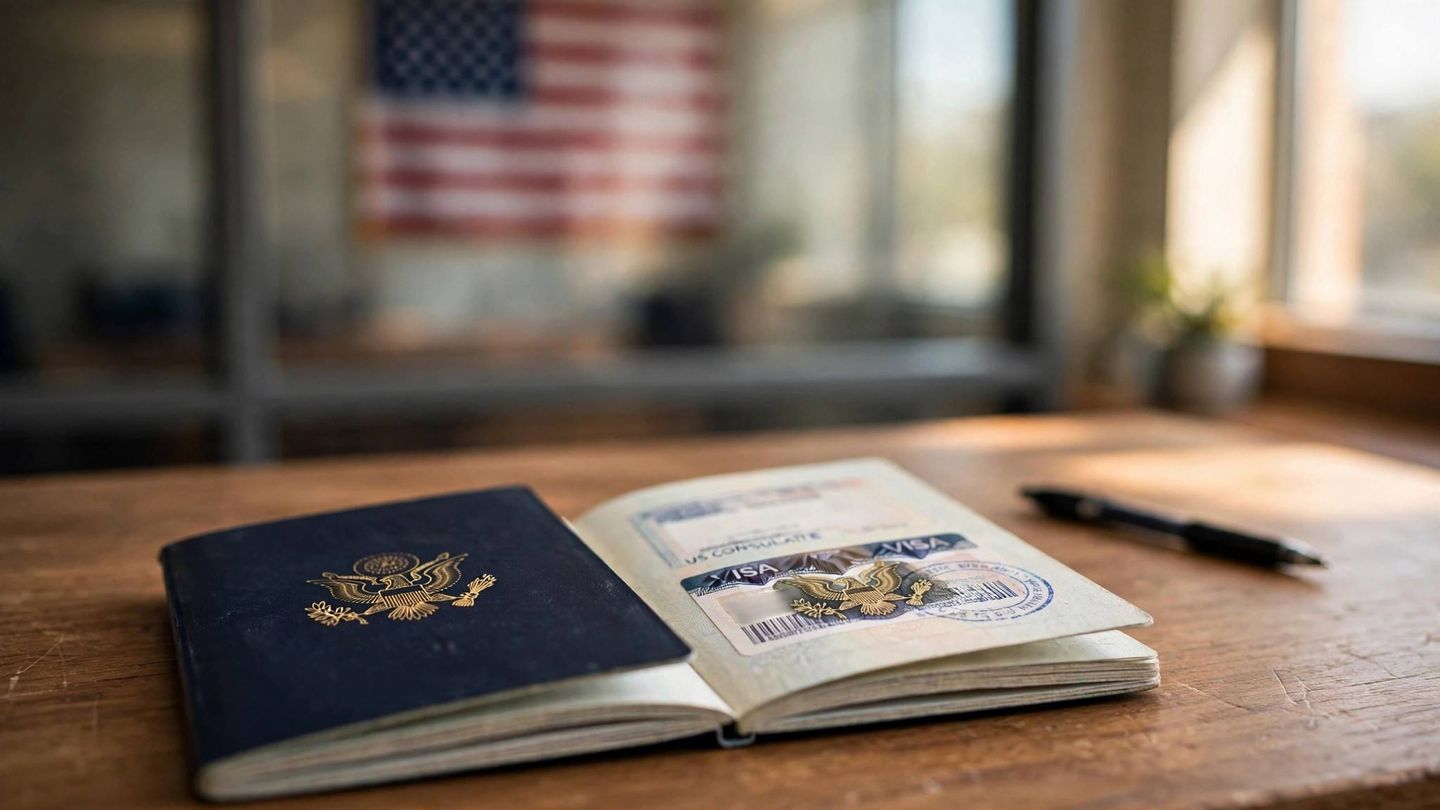
The $250 Visa Integrity Fee is real law. It has been on the books since July 4, 2025, when the One Big Beautiful Bill Act was signed. But if you are heading to a US consulate this week, you probably will not be asked to pay it. As of November 10, 2026, the State Department’s own fee schedule still does not list it, and no government notice has set a start date for collecting it nationwide.
That gap between law and practice is the whole story. The fee exists, the amount is set, and the refund rules are written — but the machinery to collect it was never switched on. Here is what we could verify today, and what is still guesswork.
What the fee is
Section 100007 of the One Big Beautiful Bill Act (Public Law 119-21, codified at 8 U.S.C. §1806) creates a fee of at least $250 for anyone issued a US nonimmigrant visa. It applies to most categories — B-1/B-2 visitors, F-1 students, J-1 exchange visitors, H-1B and L-1 workers, and others. It cannot be waived, and it sits on top of the regular visa application fee, not instead of it.
The timing matters. The law says the fee is collected “at the time of such issuance.” You do not pay it when you file the DS-160 or book your interview. You pay it after the consular officer approves your case, when the visa is actually issued. A refused applicant does not pay it at all.
The $250 figure is also not frozen. The law says the amount rises with inflation in fiscal year 2026 and later years, rounded down to the nearest dollar. But no inflation-adjusted figure has been published — the Department of Homeland Security’s fiscal year 2027 inflation notice (91 FR 62534, October 1, 2026) covers the parole, I-94, ESTA and EVUS fees, and does not list the Visa Integrity Fee.
Why nobody can tell you for sure whether your post charges it
The Department of Homeland Security said it plainly in the Federal Register on July 22, 2025 (90 FR 34511): the fee “requires cross-agency coordination before implementing” and “will be implemented in a future publication.” That future publication has not appeared. Trackers that searched the Federal Register as recently as October 31, 2026 found no implementation notice and no nationwide start date.
The State Department’s official “Fees for Visa Services” page, checked on November 8, 2026, lists the $185 non-petition application fee, the $205 petition-based fee, $315 for E visas and $265 for K visas — and no Visa Integrity Fee line item anywhere. Independent guides that checked the page again on November 7, 2026 found the same thing.
Against that, there are scattered reports that some consular posts began charging the fee around May 2026 — Boston University’s international office reported it at the time. But those reports are inconsistent, and no official announcement backs them. Indian consulates were not collecting it from F-1 students as of October 7, 2026, and the US posts in China had no notice about it as of November 7, 2026.
So the honest answer is: it depends on your post. Before your interview, check your embassy or consulate’s own fee page — that is where a fee in force at your post would appear first. And never pay a so-called integrity fee to anyone who contacts you by text or email. The fee, where it is collected, is paid through official consular channels only.
What an approved visa would actually cost
Where the fee is collected, the totals stack up fast. A B-1/B-2 visitor visa becomes $435 — the $185 application fee plus $250. A petition-based visa such as H-1B or L-1 becomes $455 ($205 plus $250). An E treaty-trader visa becomes $565 ($315 plus $250), and a K fiancé(e) visa $515 ($265 plus $250). An F-1 student would pay $785 in total where the fee applies — $185 for the visa, $350 for SEVIS, and $250 at issuance.
Some people never face it. Travelers from Visa Waiver Program countries who enter on ESTA pay no visa fee at all, because no visa is issued. Immigrant visas are exempt, as are diplomatic and official A and G visas. And changing or extending your status inside the United States through USCIS does not trigger it, because no consular visa is issued.
The refund that does not exist yet
The law does allow a refund. If you comply fully with your visa — no overstay, no unauthorized work — and your visa then expires, or you lawfully extend or adjust status, you may apply for the money back. That is the design, and it is one reason the fee is sometimes described as a deposit rather than a charge.
But as of November 2026 there is no form, no online portal, and no published process for claiming it. No one has tested the refund in practice, because collection itself has barely started. Budget for the $250 as a real cost. Do not count on getting it back.
Do not confuse it with the $100,000 H-1B fee
This is a separate fee from the much bigger one in the headlines. The $100,000 H-1B petition fee is blocked by two federal courts and is not being collected — read our full check on that here: https://northchecknews.com/h-1b-100000-fee-blocked-not-collected/
The $250 fee is different in every way: smaller, broader, written into statute rather than a proclamation, and stalled by missing implementation rather than a court order. Mixing the two up is the most common mistake in online guides.
For students, the stakes are real even while collection is patchy. F-1 refusal rates for Indian applicants hit 61% in 2025, and every extra fee changes the math of applying — see our report: https://northchecknews.com/f1-visa-rejection-rate-india-2025-canada-74-percent/
If the United States is not your only option, Canada has tightened its own doors too, with a cap of 150,000 new student arrivals a year for 2027–2029: https://northchecknews.com/canada-study-permit-cap-2026-150000-student-arrivals-2027-2029/ And Canada’s Express Entry system was overhauled on November 3, 2026, with up to 150 points now available for labour-market integration: https://northchecknews.com/express-entry-crs-overhaul-november-2026-150-points-no-lmia/
The bottom line is simple. The Visa Integrity Fee is law, it is $250 at minimum, and it is due at issuance, not application. But until the State Department puts it on its fee schedule and Homeland Security publishes how to collect it, whether you actually pay it depends on which consulate you walk into. Check that consulate’s fee page the week of your interview — and budget the $250 anyway, because the day it appears, it will not come with much warning.
FAQ
Is the $250 Visa Integrity Fee being charged right now?
There is no nationwide rollout. As of November 10, 2026, the fee does not appear on the State Department’s published fee schedule and no Federal Register notice has set a start date. Some consular posts were reported to be collecting it from around May 2026, but reports are inconsistent and no official announcement confirms them. Check your own embassy’s fee page before your interview.
When do you pay the Visa Integrity Fee?
At visa issuance — after your interview, once the consular officer approves your case. It is not paid with the DS-160 application fee. If your visa is refused, you do not pay it.
Who is exempt from the Visa Integrity Fee?
Travelers entering on ESTA under the Visa Waiver Program, because no visa is issued. Immigrant visa applicants and diplomatic or official (A and G) visa applicants are also exempt. Changing or extending status inside the US through USCIS does not trigger it either.
Can I get the $250 back?
The law allows a refund after your visa expires if you complied fully with its terms — no overstay and no unauthorized work. But as of November 2026, no refund form, portal or process exists, so treat the fee as a real cost for now.
Does the fee apply to H-1B workers?
Yes, in principle — H-1B is a nonimmigrant visa category covered by the law. But do not confuse it with the separate $100,000 H-1B petition fee, which is blocked by two federal courts and is not being collected.
Sources
- Public Law 119-21, Section 100007; 8 U.S.C. §1806 (Visa Integrity Fee)
- 90 FR 34511 (July 22, 2025) — DHS notice: implementation in a future publication
- U.S. Department of State, Fees for Visa Services — checked November 8, 2026 (no integrity-fee line item)
- F1Jobs Visa Integrity Fee tracker, updated November 2, 2026
- StitchBoat Immigration, Visa Integrity Fee status check, October 31, 2026
- PathToUS B-1/B-2 guide, fee page checked November 7, 2026
- Maven Consulting, F-1 Visa Integrity Fee check for India, October 7, 2026
This article is general information only, not legal advice. Visa fee rules can change with little notice — confirm the current fee amount and collection process on travel.state.gov or with your local US embassy or consulate before your interview.