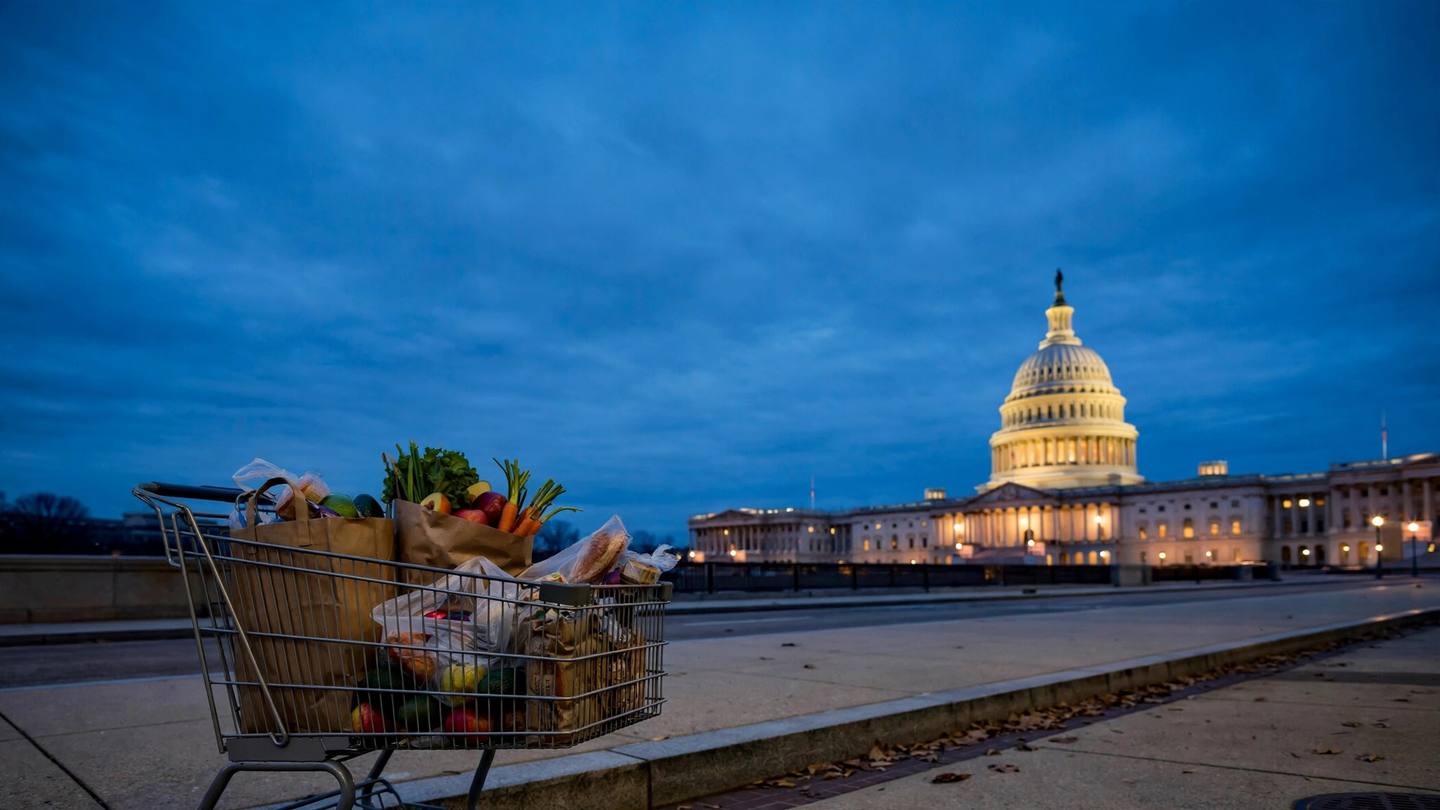
SNAP funding December 11 is now the date that matters. Senate appropriators have unveiled a $27.3 billion Fiscal Year 2027 spending blueprint for the U.S. Department of Agriculture, the Food and Drug Administration, and related agencies — including $101.2 billion in mandatory funding for SNAP and $8.5 billion for WIC. The plan is a draft only. It has not passed a subcommittee, the full Appropriations Committee, or the Senate, and federal funding still runs out on December 11, 2026 unless Congress acts.
That distinction is the whole story for the roughly 42 million people who rely on SNAP. November and December benefits are funded under current law. January 2027 is the first month at risk if lawmakers miss the deadline.
What the Senate plan includes
The Senate Agriculture bill, released as draft text this week and reported November 18, provides $101.2 billion in mandatory SNAP funding for fiscal year 2027. For context, the House agriculture bill (H.R. 8646, passed June 4 by 213 to 210) set SNAP at about the same $101.2 billion level, roughly $6.2 billion below the $107.5 billion enacted for the previous year. The Senate measure also includes $1.38 billion for Food for Peace Title II grants.
For WIC — the Special Supplemental Food Program for Women, Infants, and Children — the Senate rejected a $200 million cut in the earlier House draft and funded the program at $8.5 billion, an increase of $300 million from FY 2026 enacted levels. The Senate text also restores the WIC fruit and vegetable benefit that the House draft would have reduced. The National WIC Association said the $8.5 billion figure is enough to serve every eligible family who applies in FY27.
WIC serves nearly 7 million women, infants, and young children. For fiscal year 2027, the monthly fruit and vegetable benefit is $27 for children ages 1 to 4, $48 for pregnant and postpartum participants, and $53 for fully or mostly breastfeeding participants. The Senate plan protects those amounts instead of cutting them.
Why December 11 still controls your benefits
The government is currently funded through a short-term continuing resolution, the Continuing Appropriations and Extensions Act, 2027 (Public Law 119-103, signed September 2, 2026). For SNAP, Section 111 continues activities under the Food and Nutrition Act of 2008 at the rate to maintain program levels through December 11, 2026.
If Congress does not pass full-year bills or another stopgap by then, a lapse in appropriations begins December 12. The House has passed only 3 of its 12 annual spending bills. The Senate has passed none. The Senate Appropriations Committee finished releasing draft text for all 12 FY 2027 bills on November 16, but drafts are a starting point for negotiations, not passage.
Section 111(b) of the current law adds a cushion: mandatory payments due on or about the first day of a month may continue for any month that begins no later than 30 days after December 11 — that is, through January 10, 2027. USDA has not said exactly how it would apply that provision to SNAP in a lapse, so January risk would build through the month rather than hitting all at once on January 1. Money already loaded onto an EBT card stays usable; nothing in federal law removes it.
What happens next in Congress
Incoming Senate Appropriations Chair Patty Murray has signaled she favors another short-term stopgap into January rather than rushing full-year bills through the lame-duck session. That would freeze programs at roughly FY 2026 levels into early 2027 and let the incoming Democratic majority rewrite priorities next year.
A separate fight is also unresolved: the farm bill. Negotiators remain split over delaying the new SNAP state cost-share — Senate Agriculture Chair John Boozman has offered a one-year delay as a final offer, while Democrats hold out for at least two years. The Senate agriculture spending draft does not include another farm bill extension.
A USDA proposal published November 10 would limit SNAP categorical eligibility, affecting an estimated 6.3 million people at full effect by FY 2029. That is a proposal, not law. Public comments close December 10, and it does not affect November or December deposits.
What this means for your SNAP and WIC benefits
For SNAP households, the FY 2027 maximum allotment is $306 a month for a single person and $1,023 for a family of four, with an average benefit of about $190 per person per month. Those amounts do not change because of this draft. December deposits will go out on each state’s normal schedule — California December 1 to 10, Texas December 1 to 28 by case number, Florida December 1 to 28, New Jersey December 1 to 5, and New York December 1 to 9 outside New York City.
For WIC families, the Senate draft is good news on paper, but WIC is funded through the same December 11 law. Until a full-year bill or a new stopgap passes, both programs face the same deadline.
Read our complete SNAP guide for amounts, income limits, and work rules, and check the December payment dates by state to find your exact deposit day. If you are applying for the first time, see how to apply for SNAP in 2027 — the 30-day decision clock and the 7-day expedited shortcut still apply.
FAQ
1. Is SNAP funded for 2027 under the Senate plan?
Not yet. The Senate released draft text with $101.2 billion in mandatory SNAP funding, but the bill has not passed any committee or chamber vote. Current law funds SNAP only through December 11, 2026.
2. Will my December 2026 SNAP benefits arrive on time?
Yes. December deposits start inside the current funding law’s dates and go out on each state’s normal schedule. Sixteen states spread deposits past December 11, but the deposits are issued under the current law.
3. What happens to January 2027 SNAP benefits if Congress misses December 11?
January is the first exposed month. A 30-day cushion in current law may let payments due around January 1 continue, but USDA has not promised how it would apply. Risk would build through January if a lapse drags on.
4. Does the Senate plan cut WIC?
No. The Senate funded WIC at $8.5 billion, rejecting the House draft’s $200 million cut and restoring the fruit and vegetable benefit. The FY 2027 benefit is $27 for children, $48 for pregnant and postpartum participants, and $53 for breastfeeding participants.
5. Does the USDA categorical eligibility proposal change my benefits now?
No. It is a proposal published November 10 with comments closing December 10. It would affect an estimated 6.3 million people at full effect by FY 2029 if finalized, but it does not change November or December deposits.
Sources
- Hoosier Ag Today, Senate $27.3B Ag Spending Bill, Nov 18, 2026
- National Association of Counties, Senate Appropriations Committee releases all twelve bills
- National WIC Association statement, Nov 12, 2026
- Public Law 119-103 (Continuing Appropriations and Extensions Act, 2027) — funding through December 11, 2026