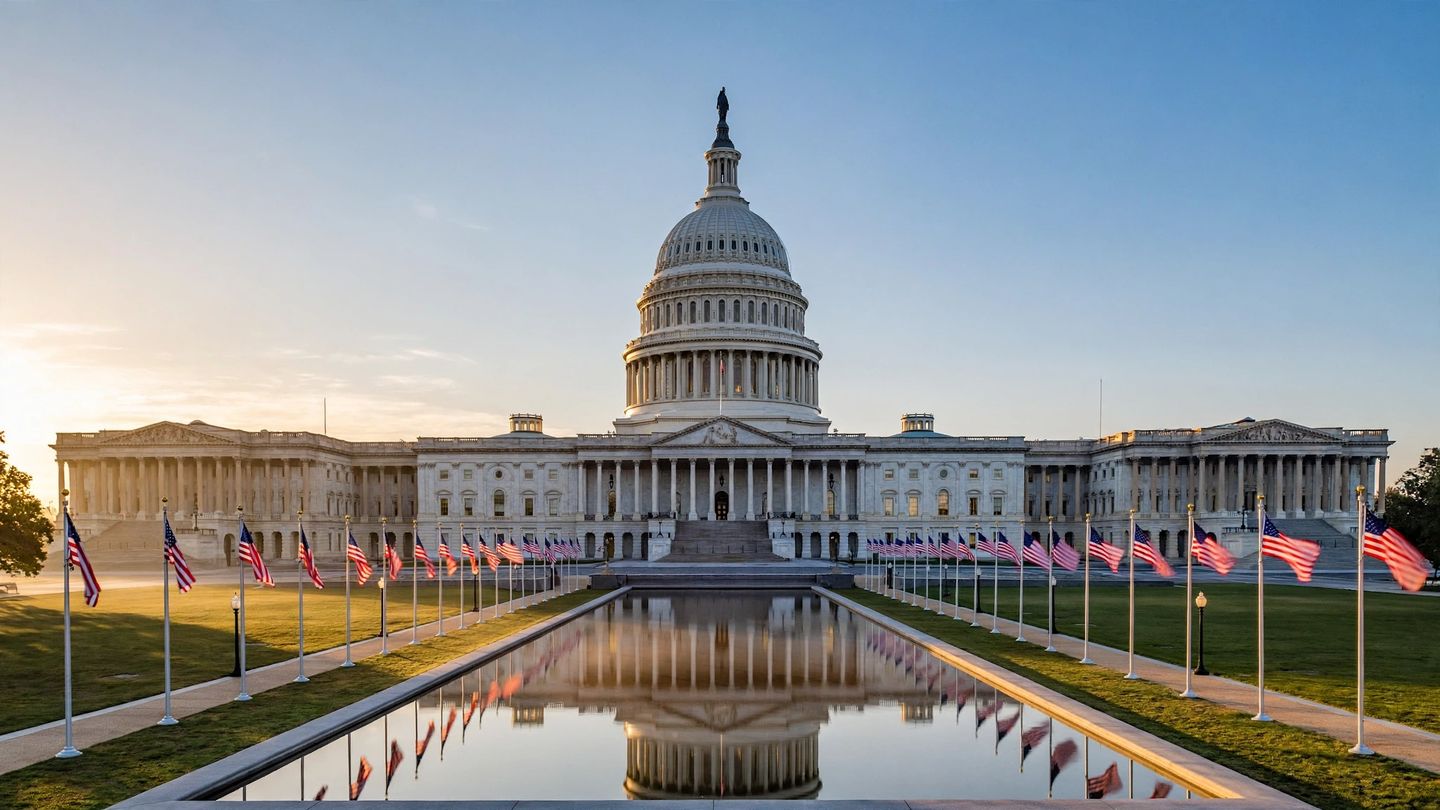
Congress lame duck December 11 deadline: Congress is back in Washington today, November 9, 2026, and the clock is already running. With the Congress lame duck December 11 deadline now the central date in Washington, every session day counts. Federal funding expires on Friday, December 11 — 32 days from now — and lawmakers have just 16 House session days before that deadline to pass a spending bill, agree another stopgap, or watch the government lapse into a shutdown days before Christmas.
This is a lame-duck session in the truest sense. The midterm election on November 3 flipped control of Congress: the Associated Press has called 252 House seats for Democrats, past the 218 needed for a majority, and projects Democrats will hold at least 54 Senate seats. But those results are still projections, not certified counts — 22 House races and the Senate races in Alaska and Mississippi are still uncalled — and nothing changes hands until the new Congress is sworn in on January 3, 2027. Until then, Republicans still run both chambers, and they still need Democratic votes in the Senate to pass anything.
The House meets at noon today, with votes starting at 6:30 p.m. Here is what is on the line for your benefits.
Congress lame duck December 11 deadline: the funding clock is tighter than it looks
The stopgap keeping the government open, the Continuing Appropriations and Extensions Act (P.L. 119-103), was signed on September 2, 2026 and funds agencies at fiscal 2026 levels through December 11. If nothing is signed by the end of that day, a lapse begins on Saturday, December 12.
The House calendar leaves almost no slack: session days run November 9–12, November 17–20, November 30–December 3, and December 8–11 — 16 days in total — with a Thanksgiving break in between. Congress has three options: pass the 12 full-year spending bills, pass another continuing resolution, or let funding lapse. The House has passed just 3 of the 12 bills and the Senate has passed none, according to the Committee for a Responsible Federal Budget. Realistically, another stopgap carrying funding into 2027 is the most likely outcome, not 12 finished bills in five weeks.
SNAP: December is safe, January is the fight
SNAP is funded through December 11 under the same stopgap, so December benefits are not in immediate danger. The real fight is over what comes next. The farm bill expired on September 30, 2026, and its provisions lapse on December 11 too. Under the One Big Beautiful Bill Act, states’ share of SNAP administration costs jumped from 50% to 75% on October 1, 2026, and a new benefit cost-share of up to 15% starts in October 2027.
The lame-duck fight is over delaying that cost-share. About 42 million Americans get SNAP, and a full month of benefits costs $8.5–9 billion — far more than the roughly $4.6–5 billion contingency fund — so a funding lapse in January would mean partial benefits, not full ones. The same law gives mandatory payments due around January 1 a 30-day cushion, so the risk builds through January rather than hitting all at once. That makes the Congress lame duck December 11 deadline the key date for January benefits as well.
Veterans’ disability pay still needs a vote
The 3.6% cost-of-living increase for VA disability compensation is still not law. The Veterans’ Compensation Cost-of-Living Adjustment Act of 2026 sits in committee in both chambers: the Senate version, S. 4487, has not moved since it was referred to committee on May 11, 2026, and the House version, H.R. 8552, has not moved since it cleared a subcommittee on June 30, 2026.
That matters because, unlike Social Security, the VA increase is not automatic — Congress has to pass it. If it passes in time, the first payment at the new rate arrives December 31, 2026, with the 100% rating rising to a projected $4,080.37 a month. Last year’s version was signed on November 25, 2025, six days before it took effect, so a late lame-duck passage is entirely possible. But until the president signs it, every 2027 VA dollar figure is a projection.
Health insurance: no fix for the subsidy cliff yet
The enhanced premium tax credits that kept marketplace premiums down expired on December 31, 2025, and as of today there is still no law bringing them back for 2027. The House passed a three-year extension, H.R. 1834, on January 8, 2026, by 230–196, but it has sat on the Senate calendar since February 10 without a vote. A Senate version failed to clear the 60-vote threshold in December 2025.
House Democratic Leader Hakeem Jeffries has said restoring the credits would be a primary objective once Democrats take control in January. But a bill still has to pass both chambers and be signed by the president, and the current Congress has to finish its own business first. For now, open enrollment runs November 1, 2026 to January 15, 2027, and you should enroll by December 15 for coverage starting January 1 — under the rules as they stand today, not the ones anyone hopes for.
What does NOT stop if funding lapses
A shutdown is not a switch that turns everything off. Social Security checks keep going, because they are paid from a trust fund outside the annual appropriations fight. Medicare claims and SNAP and WIC payments continue under the current stopgap until December 11. A December shutdown could, however, slow the IRS as it prepares for the 2027 tax filing season, which is projected to open around January 25.
Also still waiting: the National Defense Authorization Act, which Congress left unfinished before the election, and the FISA Section 702 surveillance authority, which lapsed in June. Republicans are also weighing a third reconciliation bill before they lose control on January 3.
What to watch this week
The first real test comes fast. Watch whether the House moves a spending package this week or simply signals another stopgap, and whether the VA COLA bill gets a floor vote — it is the one benefits item that can be finished quickly and with bipartisan support. The next big date after that is November 13, when Mississippi counties must certify their Senate result, and November 18, when Alaska tabulates its ranked-choice votes. Until those races are certified, the size of the incoming Democratic majorities — and what they can do in January — is still an estimate.
For now, the practical takeaway is simple: nothing about your benefits changes today. December payments are funded. The danger zone is January, and the next five weeks decide how bad it gets. Watch the Congress lame duck December 11 deadline closely over the next five weeks.
FAQ
When does Congress return for the lame-duck session?
Congress returns on Monday, November 9, 2026. The House meets at noon, with votes starting at 6:30 p.m. The session runs until the new Congress is sworn in on January 3, 2027.
When does federal funding run out?
The current stopgap, P.L. 119-103, funds the government through Friday, December 11, 2026. A lapse would begin on Saturday, December 12, unless Congress passes a spending bill or another stopgap first.
Will Social Security checks stop in a shutdown?
No. Social Security benefits are paid from the trust funds and continue during a funding lapse. SNAP and WIC are funded through December 11 under the current stopgap; January is the month at risk if no new funding law passes.
Has the VA disability COLA for 2027 been passed yet?
No. As of November 9, 2026, neither S. 4487 nor H.R. 8552 has passed. The 3.6% increase — a projected $4,080.37 a month at a 100% rating — is expected but not law until Congress passes the bill and the president signs it.
Are the enhanced ACA subsidies coming back for 2027?
Not under current law. The credits expired December 31, 2025. The House passed a three-year extension in January 2026, but the Senate has not voted on it. Restoring them would take a bill passed by both chambers and signed by the president.
Sources
- Congress.gov — H.R. 6500 / P.L. 119-103; S. 4487 and H.R. 8552 status.
- Associated Press midterm results — 2026 midterm results (252 House seats called for Democrats; at least 54 Senate seats projected; Alaska and Mississippi uncalled).
- House session calendar before the deadline — 16 House session days before Dec 11, 2026.
- December 11 shutdown deadline explainer
- PwC midterm tax outlook
- Committee for a Responsible Federal Budget — House passed 3 of 12 FY2027 bills, Senate none.
- USDA FNS / FRAC — SNAP funding, cost-share changes, contingency fund.
- KFF / IRS Rev. Proc. 2026-26 — ACA subsidy status for 2027.