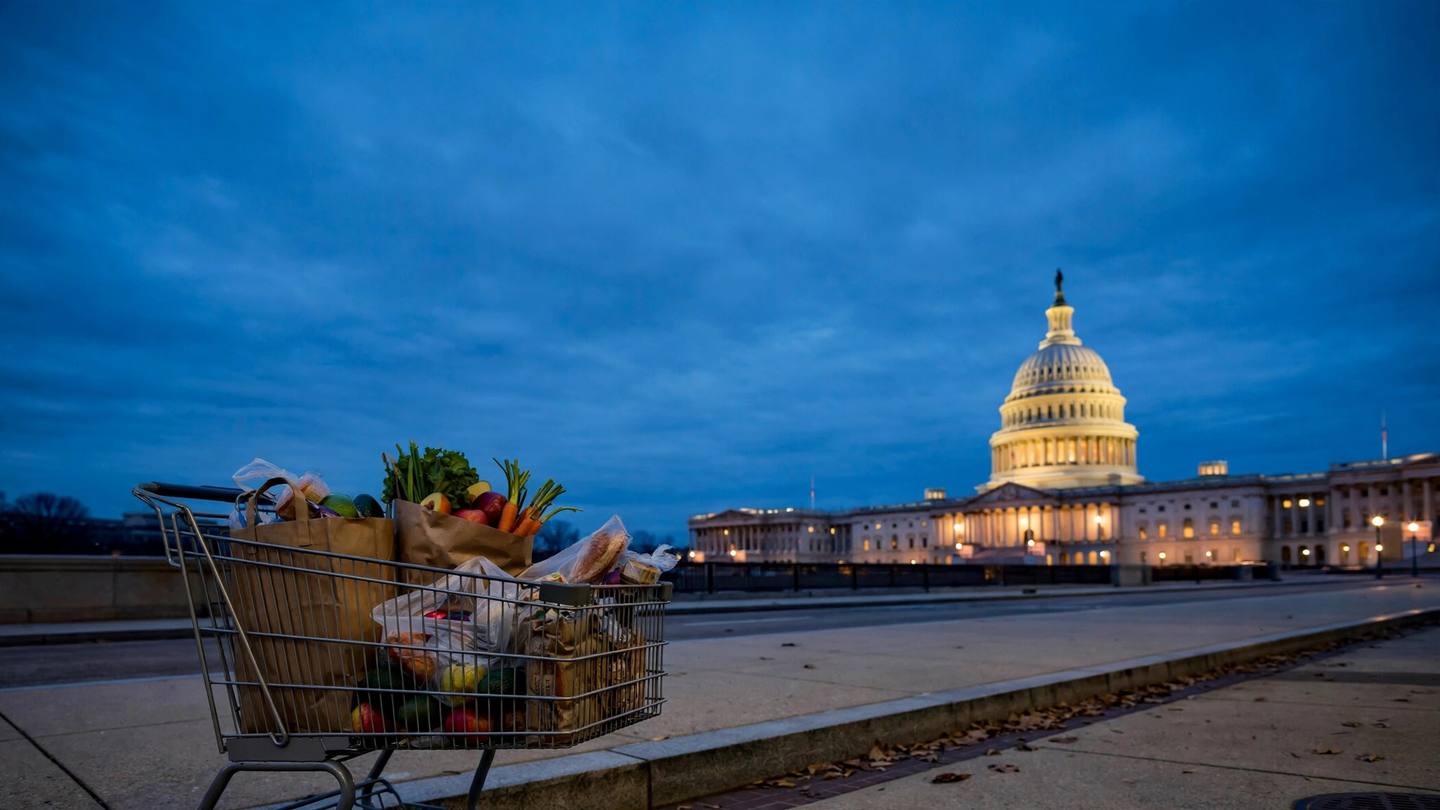
SNAP funding December 11 runs out in 27 days. As of Saturday, November 14, there is still no deal in Congress to keep the government — and food benefits — funded past Friday, December 11. Your December benefits are safe. January is where the risk sits, and two separate fights in Washington this week made a deal harder, not easier.
The deadline, in plain terms
The current law, the Continuing Appropriations and Extensions Act (P.L. 119-103, signed September 2), funds the whole government through Friday, December 11, 2026. If Congress does nothing, a funding lapse begins Saturday, December 12.
The calendar is tight. The House has just 12 session days left before the deadline: November 17–20, November 30–December 3, and December 8–11. The Senate is on state work week November 23–27 for Thanksgiving, so nothing moves that week.
Congress has passed none of the 12 full-year spending bills for fiscal year 2027. The House has passed 3 of them, including the Agriculture bill that funds SNAP (H.R. 8646, passed June 4 by 213–210). The Senate has passed none. On Thursday, November 12, Senate appropriators released five draft bills — for science, space, oceans, standards and energy — but none of them was the Agriculture bill. Leaders in both parties say the likeliest outcome is another short-term stopgap that pushes the fight into 2027, when the new Congress is sworn in on January 3. But as of today, there is no stopgap text and no vote scheduled.
Fight one: the Iran war condition
On Thursday, November 12, four senators — Michael Bennet, Tammy Duckworth, Bernie Sanders and Chris Van Hollen — issued a joint statement saying they will not accept a short-term funding deal that keeps paying for President Trump’s war in Iran. Any short-term package, they said, “must include language that restricts the Trump Administration from using appropriated funds to continue his war against Iran.” Senator Tim Kaine said the same day that he would not support a continuing resolution without such a restriction, and is drafting his own cutoff language. The Pentagon puts the cost of the war at $47.1 billion as of mid-October.
This matters because a stopgap needs 60 votes in the Senate. Even if all 53 Republicans back it, seven Democratic votes are still needed. House Democratic Leader Hakeem Jeffries declined on Thursday to say whether his members would withhold support over Iran. This is leverage, not a done deal — but it means a clean, no-strings stopgap is no longer the default outcome.
Fight two: the $350 billion Pentagon push
The same day, President Trump posted that he was calling on Senate Majority Leader John Thune to “IMMEDIATELY move” a $350 billion reconciliation bill for the Defense Department, on top of the $1.15 trillion base defense request — roughly $1.5 trillion in total for fiscal year 2027. Reconciliation needs only 51 Senate votes, so it can pass without Democrats.
But Republican senators are warning that it poisons the bipartisan funding talks. Senator Mike Rounds said pushing reconciliation through the lame-duck session “absolutely” would raise the risk of a shutdown. Senator Thom Tillis warned it could trigger another shutdown. Thune himself has said he is unsure the votes exist in either chamber. Defense Secretary Pete Hegseth is pressing lawmakers to act.
The point for SNAP readers is simple: every day spent fighting over defense money is a day not spent on the funding bill that keeps benefits flowing.
What this means for your SNAP card
December is funded. Deposits follow your state’s normal schedule, December 1–28, and money already on your card stays usable no matter what happens in Washington. A funding lapse does not take money off your card — it affects future deposits.
January is not funded yet. Deposits dated January 1 and later are the first at risk if Congress misses December 11.
There is a cushion, but it is not a guarantee. Section 111(b) of P.L. 119-103 lets mandatory payments due around the first of a month continue for up to 30 days past the deadline. The Congressional Research Service reads that as covering SNAP payments due around January 1. But USDA has made no statement on how it would apply that provision to SNAP, so do not treat it as a promise.
The math is the problem. About 42 million people receive SNAP, at an average of roughly $190 a person a month. A full month of benefits costs $8.5–9 billion. The contingency fund holds only about $4.6–5 billion — and USDA warned in a November 13, 2025 memo that it would not be enough to cover a full month’s benefits if funding lapsed. USDA has also told states to prepare their systems so they can issue reduced benefits faster if money falls short in a future lapse.
For this benefit year, the maximum SNAP payment is $306 a month for one person and $1,023 for a family of four.
What should you do? Spend normally and do not panic-buy. Check your state agency’s website for your December deposit date. If a lapse does happen, watch January deposits — not your balance — because that is where the gap would first appear.
What to watch next
November 17–20: the House returns — watch for a continuing-resolution text. November 20: the budget office must send Congress a list of rescissions under the current stopgap. November 23–27: Senate Thanksgiving break, nothing moves. December 8–11: the final four House session days. Any deal must pass both chambers and be signed by December 11.
No shutdown has been decided. Leaders in both parties say they want a short-term stopgap. But as of today, there is no bill, no vote scheduled, and two live fights — Iran and the Pentagon money — standing between 42 million people and their January groceries. We will update this story when a stopgap text lands.
FAQ: SNAP funding December 11
Is SNAP funded right now?
Yes. SNAP is funded through December 11, 2026 under P.L. 119-103. November and December deposits follow your state’s normal schedule.
Will my December SNAP benefits arrive?
Yes. December deposits are funded, and most of them land before December 12 anyway.
What happens to SNAP in January 2027 if Congress does nothing?
January deposits are not funded yet. The 30-day cushion in the current law may cover payments due around January 1, but USDA has not said how it would apply it, and the contingency fund cannot cover a full month of benefits.
Does money already on my EBT card disappear in a shutdown?
No. A funding lapse does not take money off your card. It affects future deposits, not the balance you already have.
When will we know if there is a deal?
Watch November 17–20, when the House returns. Any stopgap must pass both chambers and be signed by December 11.
Sources
- U.S. Senate (Sen. Duckworth) — joint statement by Sens. Bennet, Duckworth, Sanders and Van Hollen, November 12, 2026: https://www.duckworth.senate.gov/news/press-releases/duckworth-bennet-sanders-van-hollen-release-joint-statement-opposing-spending-package-that-funds-trumps-war-on-iran
- North Dakota Monitor (States Newsroom) — senators demand Iran-war funding cutoff in the stopgap, November 12, 2026: https://northdakotamonitor.com/2026/11/12/repub/us-senators-demand-end-to-iran-war-funding-in-bill-averting-shutdown/
- NerdWallet — Lame-Duck Congress Faced With Averting Another Shutdown, November 13, 2026: https://www.nerdwallet.com/finance/news/government-shutdown-news
- AmeriLedger (citing The Hill) — GOP senators warn Trump push for Pentagon funding risks shutdown, November 13, 2026: https://ameriledger.com/article/gop-senators-warn-trump-push-for-pentagon-funding-risks-shutdown
- govtschemes.org — Will SNAP Benefits Stop If Government Shuts Down?: https://govtschemes.org/will-snap-benefits-stop-if-the-government-shuts-down/
- benefitguardian.org — Will SNAP Be Paid in November and December 2026?: https://benefitguardian.org/programs/will-snap-be-paid
- P.L. 119-103, Continuing Appropriations and Extensions Act, 2027 (govinfo text); Congressional Research Service R49353