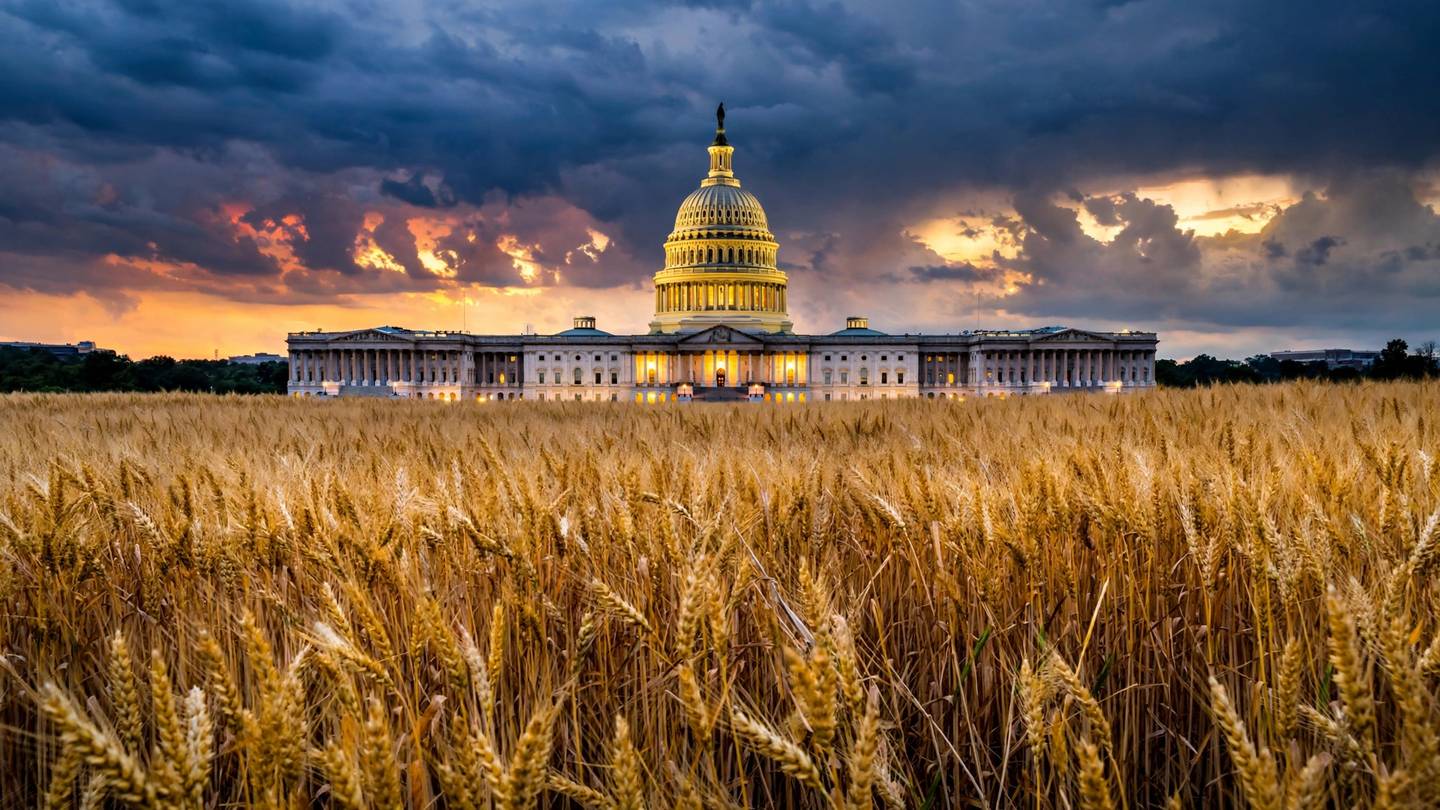
Congress lame duck farm bill talks hit their first real test this week, and the sticking point is the same one that has stalled a deal for months: who pays for SNAP when a state makes too many payment errors.
The Senate Agriculture Committee held its first hearing of the lame-duck session this week, and the two leaders — Chairman John Boozman of Arkansas and ranking Democrat Amy Klobuchar of Minnesota — both said talks continue. But the gap between them has not moved. Democrats want a two-year delay before states start sharing SNAP benefit costs. Republicans, led by Boozman, have offered one year. Agri-Pulse reports that without a delay of some kind, attempts to pass a bipartisan farm bill are dead.
That matters because the farm bill is not a side issue. It expired on September 30, 2026, and it sets the rules for SNAP, farm subsidies, conservation programs and rural aid for five years. The House passed its version in late April, but that version does not deal with the SNAP delay at all. The Senate committee’s version is stuck on it.
The SNAP cost-share fight, in plain numbers
The fight comes from the One Big Beautiful Bill Act, signed July 4, 2025. Starting in October 2027, states with high SNAP payment error rates must pay part of the benefit costs themselves — up to 15 percent, depending on how bad the error rate is. States that keep their error rate below 6 percent pay nothing.
That is a big change. Since October 1, 2026, states already pay 75 percent of SNAP’s administrative costs, up from 50 percent. Adding a share of the benefits themselves on top of that is what Democrats say states cannot budget for without more time. Klobuchar, who on Tuesday won her race to become Minnesota’s next governor, is pushing the two-year delay for states including her own.
The price of waiting is real money. The Committee for a Responsible Federal Budget puts a one-year delay at about $5 billion and a two-year delay at about $10 billion — $50 billion over a decade. The Senate’s farm bill proposes the one-year delay, plus more flexibility for states, and offsets the cost over time by raising the payment from states with the highest error rates.
There is a carrot in the law as well as a stick. New Jersey, one of ten states where SNAP is run at the county level, cut its payment error rate from 14 percent in 2024 to just under 7 percent in 2025. If it falls again in 2026, the state might not face a cost share at all.
Senator Chuck Grassley of Iowa, a member of the agriculture panel, told reporters on Tuesday that a five-year farm bill can still pass this year — but only with a compromise on SNAP. Staff-level talks among the four corners of the agriculture committees began last month, and nutrition is the one title still outstanding. Conservation changes and mandatory country-of-origin labeling are also in the mix, but nothing is official until text reaches the Senate floor.
What it means for your SNAP benefits
Nothing in this fight changes your November or December benefits. SNAP is funded through December 11, 2026 under the current stopgap law, and December payments go out on the normal state schedules. January is the month at risk if Congress cannot agree on funding — and the cost-share fight is now tied directly to that same negotiation, because a farm bill deal is one of the few vehicles that could carry a delay.
About 42 million people get SNAP, at an average of roughly $190 a month. Participation has already fallen by 5.5 million people — about 13 percent — between the law’s enactment in July 2025 and July 2026, according to the Center on Budget and Policy Priorities. That is the backdrop for the argument in Washington: one side says the cost share will push states to run the program more carefully, the other says states will cut people off to protect their budgets.
If you get SNAP, the practical advice does not change this week. Keep your case information current with your state agency, answer any recertification notice promptly, and do not trust social media posts claiming a payment has been cancelled or doubled — no benefit change has been announced.
A crowded calendar — and a December 11 deadline
The farm bill is competing for floor time with everything else the lame duck has to finish. After today — Veterans Day, when Congress is not sitting — the House has just 13 session days left before the December 11 funding deadline: November 12, November 17 to 20, November 30 to December 3, and December 8 to 11.
The House has passed 3 of the 12 regular spending bills for fiscal year 2027. The Senate has passed none. No spending bill is on this week’s House floor list, and most observers expect another short-term stopgap rather than 12 full-year bills — though House Appropriations Chairman Tom Cole has warned the choice could be a yearlong stopgap or a shutdown. A lapse would begin Saturday, December 12.
Other items are queuing up behind funding. The Senate voted on Monday to advance a bipartisan permitting package. The annual defense authorization bill, which the House passed in July, is stalled at a Senate procedural vote. And the House passed the Veterans’ Compensation Cost-of-Living Adjustment Act (H.R. 8552) by voice vote on Monday, November 9 — it was received in the Senate on Tuesday, so the projected 2027 VA disability rates, including $4,080.37 a month at a 100 percent rating, still need Senate passage and the president’s signature before they become law.
One more caution on the politics: the midterm results are projected, not certified. Mississippi certifies on November 13 and Alaska’s ranked-choice tabulation runs November 18, so do not treat control of the next Congress as settled fact yet.
What to watch next
The real test comes next week, when lawmakers return and the staff talks are supposed to take shape. Watch for three things: whether Boozman’s one-year offer moves toward two, whether farm bill language gets attached to a funding package, and whether the Senate schedules a vote at all. DTN notes that with 60 votes needed in the Senate, Republicans need Democratic support — and Democrats, after exceeding expectations in the midterms, have little reason to give ground on the two-year delay.
If no farm bill passes this year, the fallback is a fourth extension of the 2018 farm bill, which expired more than three years ago. That keeps SNAP running, but it leaves the cost-share fight — and the states’ budgets — unresolved into 2027, when the new Congress takes over on January 3.
FAQ: Congress Lame Duck Farm Bill
What is the SNAP cost share?
Starting October 2027, states with SNAP payment error rates above 6 percent must pay up to 15 percent of benefit costs. States below 6 percent pay nothing.
Why is the farm bill stuck?
Democrats want a two-year delay of the SNAP cost share; Republicans have offered one year. Without a delay, a bipartisan farm bill cannot pass.
Does this affect my SNAP benefits in November or December?
No. SNAP is funded through December 11, 2026, and December payments go out on normal state schedules. January is the month at risk if funding lapses.
When does government funding run out?
Friday, December 11, 2026. A lapse would begin Saturday, December 12, unless Congress passes full-year bills or another stopgap.
What happens if no farm bill passes this year?
Congress would likely pass a fourth extension of the 2018 farm bill, keeping SNAP running but leaving the cost-share fight unresolved into 2027.
Sources
- Agri-Pulse — SNAP fight looms as ag leaders turn to farm bill in lame duck
- DTN Progressive Farmer — Farm bill competes in crowded lame duck
- KJAN / Brownfield — Senate ag leaders continue farm bill compromise talks
- Committee for a Responsible Federal Budget — Lame duck session shouldn’t be excuse to borrow more