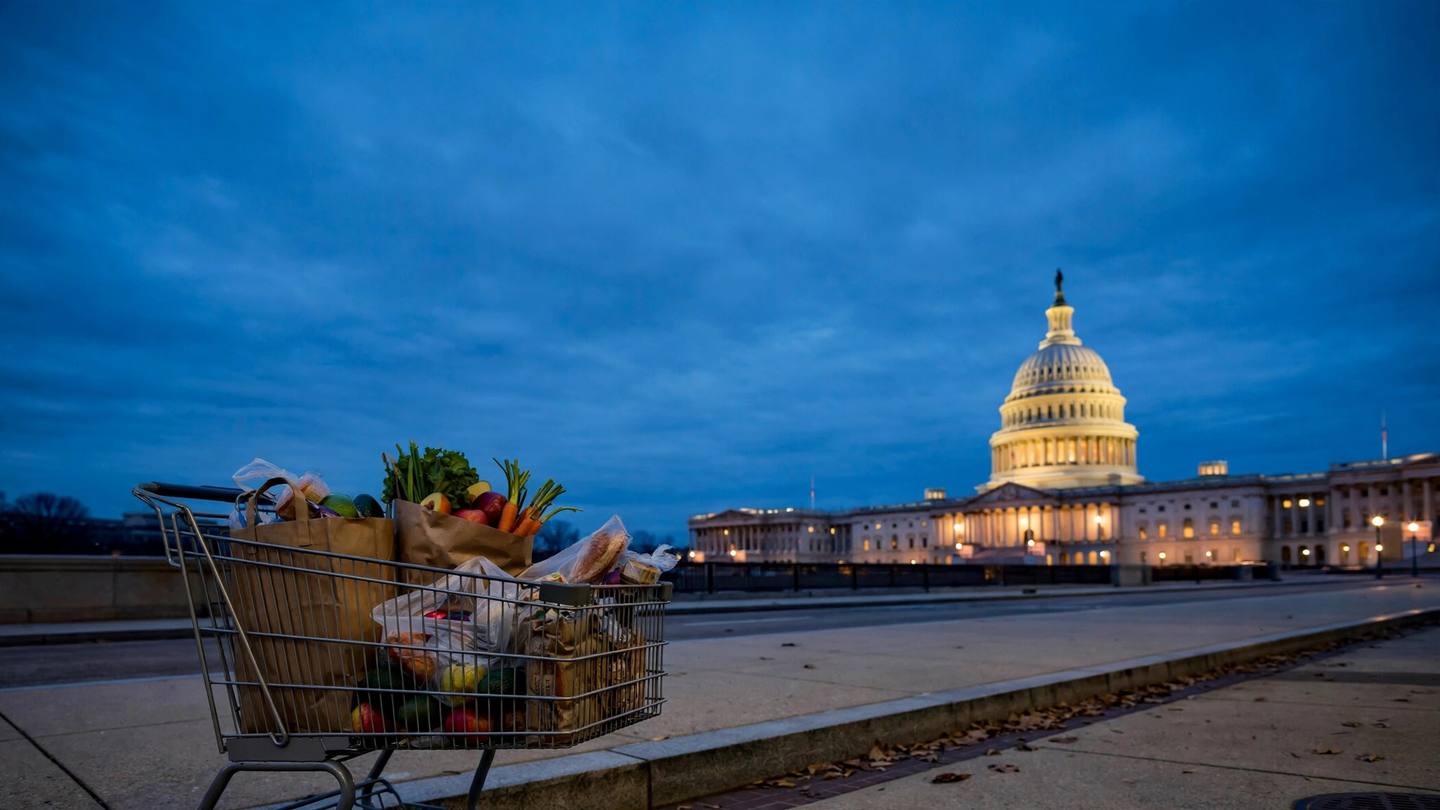
President Donald Trump urged Republicans on Thursday to pass a new five-year farm bill before Democrats take control of Congress in January, putting the farm bill SNAP cost share fight at the center of a short lame-duck window. This is an urging, not passed law. No new farm bill has cleared the Senate, and current SNAP rules still apply.
What Trump asked for on November 19
Reuters reported on November 19 that Trump made the push in a Truth Social post from Air Force One as he returned from a trip to Asia that included a summit in China. He wrote that farmers and ranchers need certainty ahead of the 2027 planting season and said they are not interested in further delays.
The timing matters because Democrats will assume control of Congress in January. Trump wants Republicans to finish the bill this year, while his party still holds both chambers. More than 400 farm groups also urged congressional leaders this week to pass a farm bill this year.
Where the farm bill stands now
The House passed its version of a five-year farm bill in April. The bill is H.R. 7567, the Farm, Food, and National Security Act of 2026, and it passed the House 224 to 200 on April 30. It still needs to pass the Senate before it can go to the President.
The Senate Agriculture Committee passed its own farm bill on a party-line vote in September. That bill is S. 5526, the Agriculture and Nutrition Act of 2026. A committee vote is not a floor vote, and the Senate has not yet voted on final passage.
To pass the Senate, the bill will need 60 votes. That means at least seven Democrats would need to support it. Senate Agriculture Chair John Boozman and Ranking Member Amy Klobuchar have both said they hope to finish the bill this year.
The SNAP cost-share sticking point
The main dispute is how long states get before they must help pay for SNAP benefits. Democrats want a two-year delay. Boozman offered a one-year postponement and called it the final offer in early November.
Klobuchar said at a November 10 Agriculture Committee hearing that she hopes Congress can find a compromise that returns the farm bill to a bipartisan process. Early November reporting also said Boozman declined to rule out a two-year delay, but no final deal has been announced. Readers should treat the one-year versus two-year question as unsettled.
For background on how this fight developed, see our earlier coverage of the lame-duck farm bill and SNAP cost share talks and the SNAP cost shift delay debate. New readers can start with what SNAP is and how the program works.
What current law already requires
Until October 1, 2027, the federal government pays 100 percent of SNAP benefit costs. Starting in fiscal year 2028, which begins October 1, 2027, states may have to pay a share of benefit costs based on their payment error rate under Public Law 119-21.
The tiers in Section 10105 are clear. A state with an error rate below 6 percent pays 0 percent. A rate from 6 percent to below 8 percent means 5 percent. A rate from 8 percent to below 10 percent means 10 percent. A rate of 10 percent or higher means 15 percent.
Here is a simple example. Suppose a state has a 7 percent payment error rate for the year that counts. Under current law, that state would pay 5 percent of benefit costs in fiscal year 2028, and the federal government would pay 95 percent. A one-year delay would push that start to fiscal year 2029, and a two-year delay would push it further.
Administrative costs are separate, and that change has already started. Under Section 10106, the federal share was 50 percent through fiscal year 2026 and dropped to 25 percent for fiscal year 2027 and later, leaving states with 75 percent. Fiscal year 2027 began October 1, 2026.
How the December 11 funding deadline fits in
The farm bill push competes with a separate funding deadline. Under Public Law 119-103, the Continuing Appropriations and Extensions Act, 2027, funding runs through December 11, 2026. A lapse would begin December 12 if Congress does not pass a new funding law.
Benefits do not stop on December 11. Section 111 keeps Food and Nutrition Act activities going through December 11, and Section 111(b) allows obligations for mandatory payments due on or about the first day of a month up to 30 days after December 11. That covers payments due around January 1, 2027, which is why January is the pressure month if a lapse drags on.
We explain the funding dates in detail in our guide on SNAP funding through December 11. For payment timing, see December 2026 SNAP payment dates by state.
The calendar is tight
The Senate has 17 more work days this year, according to a tentative chamber schedule cited by Reuters. The Senate tentative schedule lists a State Work Period from November 23 to November 27 for Thanksgiving, and a State Work Period from December 21 to December 31.
That leaves roughly five weeks of lame-duck work before adjourning around December 18, with both chambers out for Thanksgiving week. Congress must also handle the December 11 funding deal in the same window. Time, not just votes, is a real constraint.
What this means for SNAP households
Nothing in the November 19 urging changes your benefit amount today. The cost-share fight is about which level of government pays part of the bill in future years, not about a cut to December benefits. December benefits remain funded under current law.
Two other SNAP items in the news are separate from this farm bill vote and should not be confused with it. One involves retailer stocking rules, and the other is a federal eligibility proposal that has not become final law. This article covers only the farm bill cost-share delay and the December 11 funding deadline.
If Congress passes a farm bill with a delay, states would get more time before benefit cost sharing starts. If Congress does not act, current law stays in place and benefit cost sharing still starts in fiscal year 2028. Either way, watch for a Senate floor vote and a final funding law before December 11.
Frequently Asked Questions
Has the five-year farm bill passed?
No. The House passed H.R. 7567 in April, and the Senate Agriculture Committee passed S. 5526 in September. The full Senate has not voted, so the bill has not gone to the President and is not law.
Will SNAP benefits stop on December 11, 2026?
No. Funding under Public Law 119-103 runs through December 11, 2026, and Section 111(b) allows payments due around January 1, 2027 to still be made. A lapse would begin December 12, and January would become the pressure month if Congress does not pass new funding.
When does state SNAP benefit cost sharing start under current law?
It starts in fiscal year 2028, which begins October 1, 2027. States pay 0 percent, 5 percent, 10 percent, or 15 percent depending on their payment error rate. Until October 1, 2027, the federal government pays 100 percent of benefit costs.
What is the difference between administrative cost sharing and benefit cost sharing?
Administrative cost sharing covers the cost of running the program, and the federal share already dropped from 50 percent to 25 percent for fiscal year 2027. Benefit cost sharing covers the food benefits themselves and does not start until fiscal year 2028 under current law.
What would a one-year or two-year delay change?
A one-year delay would move the benefit cost-share start from fiscal year 2028 to fiscal year 2029. A two-year delay would move it one year further. The Senate committee bill includes a delay to fiscal year 2029, while Democrats have asked for two years. No final delay length has been agreed.
Sources
Reuters, November 19, 2026, Trump urges Congress to pass a new farm bill (via U.S. News): usnews.com. Public Law 119-21, Sections 10105 and 10106, GovInfo: govinfo.gov. Public Law 119-103, Sections 106 and 111, GovInfo: govinfo.gov. Congressional Research Service R48918, The 2026 Farm Bill, updated November 10, 2026: everycrsreport.com. U.S. Senate Tentative 2026 Legislative Schedule: senate.gov. NCC Washington Report, November 13, 2026: nccwashingtonreport.com. Note: Congress.gov was Cloudflare-blocked during checking on November 21, 2026, so statutory text was verified on GovInfo and CRS text was read via EveryCRSReport. USDA FNS pages were cross-checked against GovInfo statutory text.